Two Microsoft Copilot Updates Change Managers Need to Know About
This doesn't work with the the way we operate." Sound familiar? One of May's biggest Copilot updates just made that objection a lot harder to make. Here's what changed and how to use it to drive real adoption in your organisation.
Rochelle Arthurs
6/2/20265 min read
Microsoft has been busy. Two significant Copilot updates dropped in the last few weeks and while most of the coverage has focused on the technical features, very little has been written about what they actually mean for change professionals managing AI adoption on the ground.
That's what this post is for.
I've been leading enterprise technology and AI change programmes for 14 years, including one of the UK's largest Microsoft 365 rollouts. Here's my honest take on both updates and exactly how you can use them in your change work this week.
What happened
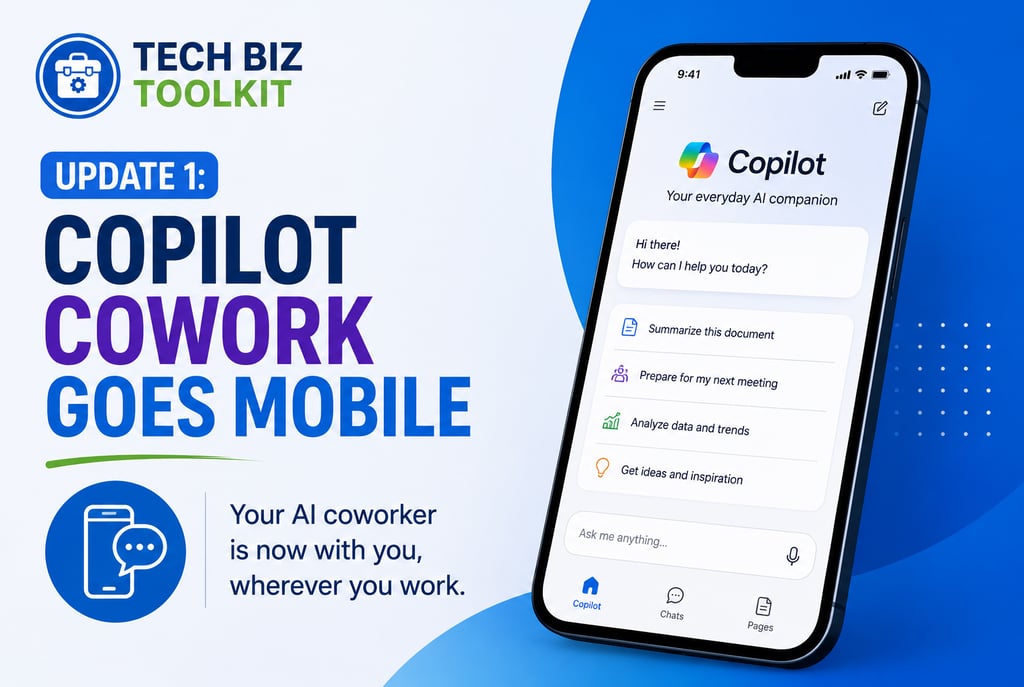
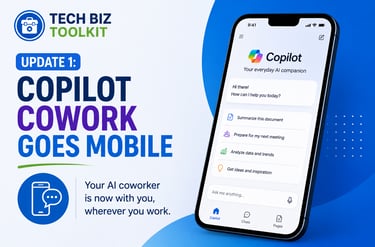
Microsoft expanded Copilot Cowork to iOS and Android in early May 2026. This means your team can now delegate multi-step, autonomous work process approvals, data compilation, document review, workflow tasks — directly from their phones.
The key word is autonomous. Copilot doesn't just respond to questions anymore. It handles tasks over time and delivers completed work. Your team delegates, gets on with other things, and comes back to finished outputs.
This is a meaningful shift from Copilot as a chat assistant to Copilot as a genuine work agent.
Why it matters for change professionals
One of the hardest parts of any AI adoption programme is making the value tangible for non-technical staff. You can show people how to write better emails with Copilot, and most of them will nod politely and carry on doing what they've always done.
But showing someone that a multi-step task they do every week, one that used to take an hour is now handled autonomously while they were in a meeting? That lands differently.
Mobile access removes one of the remaining friction points for frontline and hybrid workers. They don't need to be at a desk to benefit. They don't need to context switch. They delegate from their phone and move on.
This is the kind of concrete, workflow-level change that drives real adoption. Not training. Not awareness campaigns. Actual changed behaviour.
How to use this in your change programme this week
Step 1: Identify one process Work with a department head or team lead to identify one repetitive, multi-step process their team runs every week. Good candidates: expense approval workflows, status report compilation, meeting summary distribution, document review cycles.
Step 2: Set up Copilot Cowork Configure Copilot Cowork to handle that process. Start small one team, one workflow.
Step 3: Document the outcome When the task completes autonomously, document the time saved and the quality of the output. Get a quote from the team lead about their experience.
Step 4: Use it as your proof point Present the outcome to your leadership team or steering group. Real numbers from a real workflow in your own organisation will do more for your adoption programme than any vendor case study.
This is your change management superpower right now finding the proof points that make the business case undeniable.
What happened
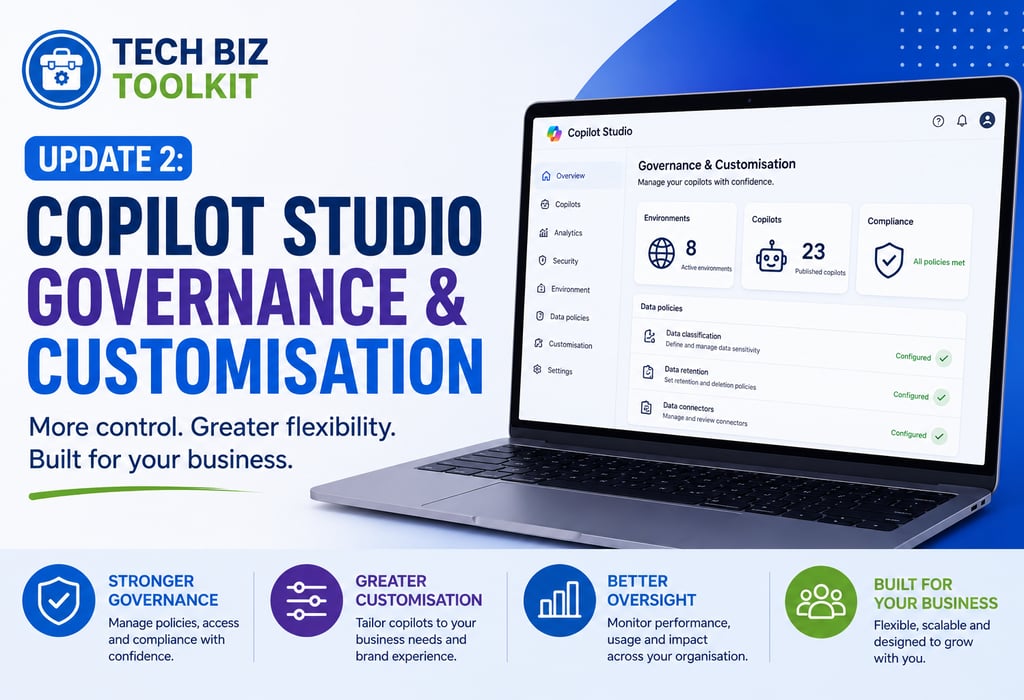
Copilot Studio released stronger agent governance controls and workflow customisation templates in April and May 2026. Organisations can now configure Copilot to match their specific workflows, compliance rules, writing styles and approval processes without any coding required.
This means change managers and business leads not just IT can shape how Copilot behaves in their organisation.
Why it matters for change professionals
"But this doesn't work the way we operate."
If you've been running AI adoption programmes, you've heard this. It's one of the most common and most legitimate sources of resistance. People aren't being difficult when they say it. They're right. Generic AI outputs that don't reflect how the organisation actually works create friction, erode trust, and slow adoption.
The governance update changes that equation. Now you can sit down with a resistant team and ask: "What would this tool need to do differently for it to work for you?" And then actually configure it.
This shifts Copilot from a tool that asks people to change their behaviour, to a tool that adapts to how people already work. That's a fundamental change in the adoption conversation.
The compliance and governance controls also address another major blocker in regulated industries and large enterprises — the concern that AI outputs might not meet internal standards or policies. Now you can build those guardrails in from the start.
How to use this in your change programme this week
Step 1: Find your most resistant team Identify the team or function that has been most vocal about AI not fitting their way of working. They're actually your best test case here.
Step 2: Run a workflow mapping session Spend an hour with that team mapping their most painful workflow. What steps do they follow? What language do they use? What are the compliance requirements? What would the ideal output look like?
Step 3: Build a custom agent in Copilot Studio Use the new workflow customisation templates to configure a Copilot agent that matches what you've mapped. You don't need to code. You need to understand the workflow, which as a change manager, you already do.
Step 4: Pilot it with that team Run a two-week pilot. Document the outputs, gather feedback, measure time savings.
Step 5: Use the resistant team as your advocates When the team that was most sceptical becomes the team that can't imagine working without it that's your most powerful change story. Use it everywhere.
The Bigger Picture
Both of these updates point in the same direction: Copilot is moving from assistant to agent, and from generic to configurable.
For change professionals this is significant. The adoption conversation changes when the tool genuinely adapts to the organisation, rather than asking the organisation to adapt to the tool. The proof points become easier to find when the tool handles real, measurable work autonomously.
The organisations that will get ahead in the next 12 months aren't the ones that buy the most licences. They're the ones that have a change strategy in place to make those licences count.
That's where change managers come in. And with the right approach, these updates make your job meaningfully easier.
Resources
If you want to go deeper on AI-powered change management, here are some free resources to get you started:
Claude Prompt Library for Change Managers — 10 ready-to-use AI prompts for real change deliverables
READ Prompt Toolkit — the prompting framework that works across Copilot, Claude and ChatGPT
Free CIA Bundle — Change Impact Assessment templates and AI prompts
About the author
Rochelle Arthurs is a Lead Business Change Manager and AI Transformation Leader with 14 years of enterprise change experience. She is the founder of Tech Biz Toolkit; practical AI tools, templates and frameworks for change professionals. Connect on LinkedIn or subscribe to the fortnightly newsletter.
Sources
Smart Tools for Smarter Business Change
Tools and insights for effective business transformation.
Email: info@techbiztoolkit.com
© 2026. All rights reserved.